In early 2025, Vietnam’s feed and grain industries are riding a wave of favorable market dynamics: zero-percent tariffs on U.S. wheat, record-low global prices, and abundant international supply. This combination has driven the country’s wheat imports to over 1.6 million metric tons in Q1, up 9.3% year-on-year, according to Vietnam Customs. But behind these headline gains lies a deeper concern—overdependence on imported wheat in a world of rising geopolitical and climatic uncertainty.
Vietnam’s Wheat Import Landscape
Wheat is a critical input in Vietnam’s rapidly growing animal feed industry, alongside corn and soybean meal. Yet due to unsuitable climate and soil conditions, Vietnam produces no wheat domestically, meaning 100% of demand is met through imports.
According to Q1 2025 data:
- Total wheat imports: 1.6 million tons
- Import value: $430+ million USD
- Average import price: $264/ton, down nearly 6% from Q1 2024
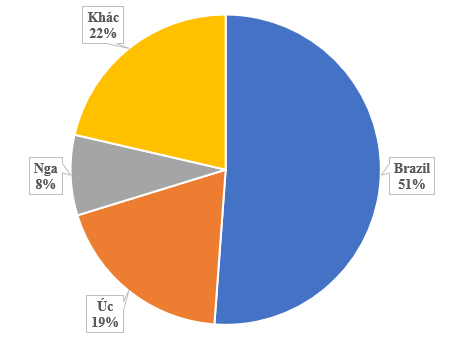
While Brazil remained Vietnam’s top supplier at 833,000 tons, followed by Australia (310,000 tons) and Russia (136,000 tons), it’s the United States that has drawn attention due to:
- A sharp price drop to $286/ton (–13% YoY)
- Zero MFN tariff under Decree 101/2021/NĐ-CP
- A shipment volume of 54,000 tons, valued at $15.4 million USD
- However, this represented a 49% drop in volume and 56% in value compared to Q1 2024
This decline reflects both competitive pressure from Brazil and shifting logistics but also underscores the pricing flexibility U.S. wheat exporters now offer amid surplus conditions. The FAO estimates global wheat production in 2025 will reach 796 million tons, up 1%, with the U.S. expected to produce 50.56 million tons, a 2.5% increase from the previous year.
Economic Opportunity for Vietnam’s Feed Sector
The Vietnam Animal Husbandry Association notes that wheat’s role in formulated animal feed is expanding, helping stabilize prices and improving livestock performance. This is crucial at a time when feed input costs are falling, supporting the recovery of Vietnam’s domestic livestock industry.
A recent VNDirect report forecasts robust growth in feed, infrastructure materials (e.g., PVC, asphalt), and associated sectors in 2025, suggesting a corresponding rise in cereal grain demand.
The Vulnerability: Import Dependence
While Vietnam’s tax-free access to U.S. wheat presents clear advantages, total dependence on foreign supply raises serious questions:
- Geopolitical shocks (e.g., Ukraine conflict, export bans)
- Extreme weather in major producing nations
- Shifting trade policies in supplier countries
These risks can lead to supply chain disruptions and price volatility, which directly impact Vietnam’s food security and agribusiness competitiveness.
The Strategic Response: Diversification and Resilience
Experts and policymakers are urging a dual strategy:
- Maintain tax incentives to support feed and livestock growth
- Expand and diversify the supply base, not only across more countries but also by:
- Investing in storage infrastructure to hedge against shocks
- Exploring regional trade partnerships
- Researching alternative domestic crops or limited-scale wheat trials in highland zones
Vietnam’s move to capitalize on record-low wheat prices and zero-tariff access to U.S. supply is a smart economic move—but not without its risks. For long-term resilience, diversification of supply sources, strategic stockpiling, and policy foresight must accompany short-term gains. As wheat continues to underpin animal feed and food systems, safeguarding this vital supply chain is not just good business—it’s national security.