Protecting Wheat and Barley from Fungal Threats: South Korea’s Early Warning and Field Support Plan
South Korea’s Rural Development Administration (RDA) has launched a coordinated disease prevention campaign as wheat and barley enter the heading stage, a critical growth period when fungal diseases like Fusarium head blight (FHB) and powdery mildew pose serious risks.
The RDA issued this warning after FHB incidence reached 27.9% in major cereal cultivation areas in 2023—a 5.4-fold increase compared to the previous year. This dramatic rise was attributed to warm temperatures and frequent rainfall during the flowering phase, creating ideal conditions for fungal pathogens. In response, the government is emphasizing early disease monitoring, drainage management, and well-timed fungicide application.
Why This Season Is Crucial
The heading and flowering stages of wheat and barley, typically occurring in April and May, coincide with increased rainfall and fluctuating humidity. According to agronomic data, relative humidity above 90% for three consecutive days during warm weather significantly increases the likelihood of FHB outbreaks. The disease not only reduces grain quality and yield but can also render entire harvests unmarketable due to mycotoxin contamination.
To mitigate this, the RDA recommends the following:
- Drainage Improvement: Dig trenches at least 30 cm deep to reduce field humidity and prevent water stagnation.
- Timely Fungicide Application: For wheat, spray before or during flowering for maximum effectiveness. Fungicide applied more than 5 days after flowering significantly reduces its efficacy.
- Crop-specific Measures: Registered fungicides are available for barley and oats, which should be used at the early onset of disease symptoms. For wheat, where fungicides are not yet officially registered, adherence to optimal seeding rates and fertilizer application is essential to suppress disease risk.
National Field Support in Action
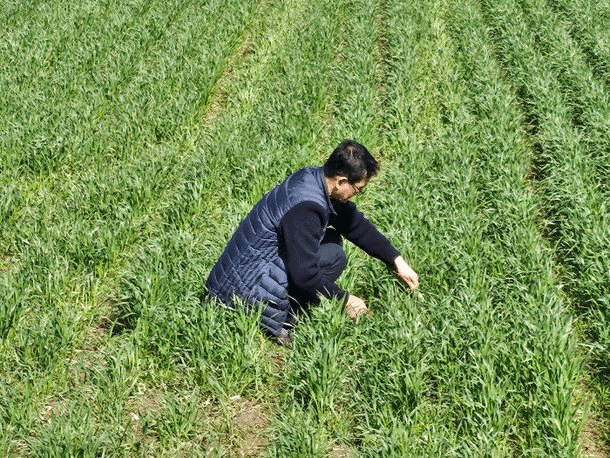
To help implement these guidelines, the RDA, in collaboration with local agricultural research institutes and extension centers, has deployed a Technical Field Support Task Force. These teams are actively working in key production zones, including nine major counties and over 190 sample farms, monitoring crop health and advising farmers on localized prevention strategies.
Their guidance includes:
- Pre- and post-emergence crop health monitoring
- Tailored disease control based on regional wheat variety characteristics
- Advice on improving yield per unit area through smart disease and nutrient management
Additionally, farmers are encouraged to consult the “Agrochemical Safety Information System”, where they can search for approved fungicides by crop and active ingredient.
Preparing for What’s Next
With FHB being a perennial threat to cereal production globally—and particularly devastating in humid, warm spring climates like Korea’s—the RDA’s proactive stance is a critical safeguard. In 2023, the global cereal industry faced multi-billion-dollar losses due to similar disease outbreaks, making local prevention efforts part of a larger global food security narrative.
As the 2024 wheat and barley season progresses, South Korea is taking essential steps to avert a repeat of last year’s disease surge. Through coordinated field support, better drainage, precise fungicide use, and farmer education, the country aims to protect crop health and secure stable grain yields. Farmers are urged to act early and stay informed to safeguard their fields against these rising threats.
Error