Bayer’s Investment in Zambia: Seeds of Change for African Agriculture
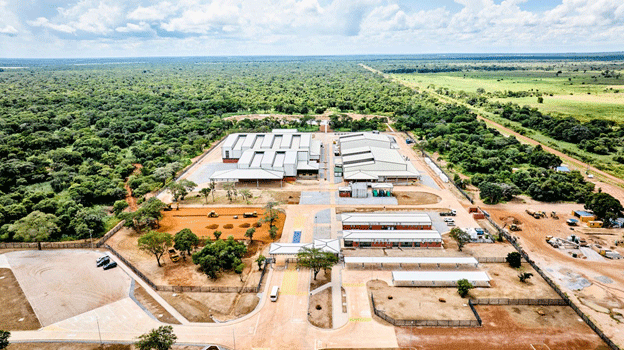
In March 2025, Bayer inaugurated a state-of-the-art maize seed facility in Kabwe, Zambia, investing €32 million to significantly boost the production of high-quality hybrid maize seed. The new facility triples Bayer’s current seed production capacity in the country and is projected to produce enough maize annually to feed around 30 million people in Zambia and neighboring nations.
According to the Food and Agriculture Organization (FAO), maize is the most widely cultivated cereal in Sub-Saharan Africa, contributing over 30% of the region’s calorie intake. In Zambia, maize accounts for about 60% of daily caloric consumption, primarily through the local staple nshima. Yet, despite the region’s fertile land and agricultural promise, one in five Africans still faces chronic food insecurity.
Empowering Smallholder Farmers – The Backbone of African Agriculture
Smallholder farmers—those cultivating less than 10 hectares—play a critical role in feeding the continent, producing up to 70% of the food consumed in Sub-Saharan Africa. Bayer’s initiative directly addresses this group by expanding access to certified hybrid maize seeds that are high-yielding, climate-resilient, and disease-tolerant.
In 2025, the company aims to supply seeds to 6.4 million smallholder farmers, scaling up to 10 million by 2030, contributing to Bayer’s broader goal of reaching 100 million smallholders worldwide by the end of the decade. With the introduction of this facility, farmers in Zambia and the region can access better genetics, agronomic training, and stewardship support—key tools to increase productivity and income.
Growing Africa’s Agricultural Potential
Africa’s agri-food sector is projected to triple in value by 2030, reaching over $1 trillion, according to the African Development Bank. Bayer’s strategic investment aligns with this trajectory. The company plans to double its Crop Science Division’s business in Africa by 2030 and has earmarked an additional €35 million through 2028 to expand its seed production network across the continent.
The demand for Dekalb-brand maize hybrids, Bayer’s flagship seed line, has consistently outpaced supply, driven by farmers’ need for more reliable and resilient crops. By localizing seed production in Zambia and integrating with its existing grower network, Bayer strengthens both its market position and regional supply chains.
Socioeconomic Impact: Jobs, Infrastructure, and Healthcare
Beyond agriculture, the new Kabwe facility is expected to create over 15,000 seasonal on-farm jobs and employ 180+ people directly, supporting local economies. Bayer is also funding two community initiatives:
- Water Access Project – Restoration of a borehole and installation of a new water tank and pipelines to ensure clean water for residents near the plant.
- Healthcare Center – Development of a new clinic in partnership with Zambia’s Ministry of Health and local organizations. The clinic will serve 10,000+ people, improving access to essential healthcare services, especially for women and children in remote communities.
These efforts demonstrate how agribusiness investment can catalyze rural development and create long-term value beyond crop yields.
Bayer’s maize seed facility in Zambia represents more than just an agricultural investment—it’s a model for how science, business, and social impact can intersect. By supporting millions of smallholder farmers with better seeds, strengthening regional food security, and investing in community infrastructure, Bayer is planting the seeds for a more resilient and prosperous future across Sub-Saharan Africa. As food demand grows and climate challenges intensify, such initiatives will be essential to feeding the continent and unlocking its agricultural potential.
Error