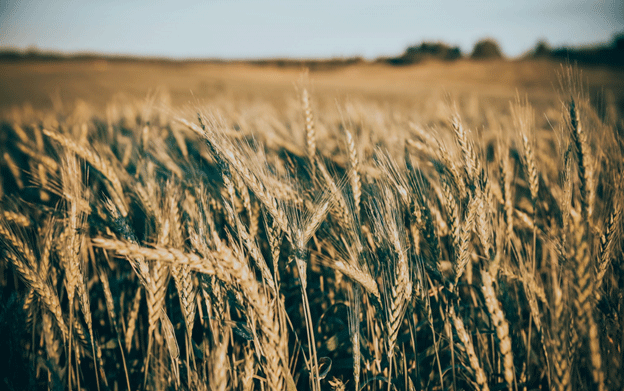
As the 2025 spring planting season approaches, scientists at the Krasnoyarsk Research Institute of Agriculture (part of the Siberian Branch of the Russian Academy of Sciences) have announced the development of two new wheat varieties specifically bred for Siberia’s challenging climatic conditions. Named “Beloyarskaya” and “Minusinskaya Stepnaya”, these varieties offer a combination of rapid maturation, disease resistance, and adaptability to extreme weather fluctuations—key traits for farmers in the northern regions of Russia.
According to the Krasnoyarsk Ministry of Agriculture, these varieties are still undergoing institutional testing and are not yet included in the official state registry, meaning they will not be commercially planted in 2025. However, early lab and field trials have shown strong potential, especially in comparison to conventional varieties that struggle with Siberia’s short growing season and unpredictable weather.
The breeding of a new wheat variety is no small feat—it takes up to 10 years to fully develop and evaluate. Researchers not only test for agronomic performance in the field but also assess baking quality through in-house bakeries, where experimental grains are milled and made into bread to ensure market viability.
Siberia and other cold-climate regions present unique challenges for cereal production. According to the FAO, global wheat varieties often underperform in high-latitude zones due to short frost-free periods and susceptibility to fungal diseases, such as snow mold and rusts. Therefore, region-specific breeding programs like this one are vital for sustaining grain yields under these conditions.
In 2023, Krasnoyarsk Krai produced over 1.6 million tonnes of grain, with wheat being a primary component. However, variable yields due to climate extremes remain a concern. The development of early-maturing, climate-tolerant varieties could help reduce crop losses and extend planting windows, thereby improving long-term food security in Russia’s vast interior regions.
While these new varieties are still in the pipeline, the announcement has sparked interest among local farmers and agricultural researchers. Their potential deployment in coming years could support broader trends in climate-resilient agriculture, not only in Siberia but in other cold and variable farming environments across the globe.
The creation of “Beloyarskaya” and “Minusinskaya Stepnaya” is a significant step forward for wheat cultivation in northern regions. Though not yet commercially available, their development highlights the importance of regional breeding programs tailored to specific environmental challenges. As climate volatility increases, such innovations will be essential to securing stable yields and supporting farmers working at the edge of the world’s arable zones.
Error