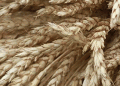

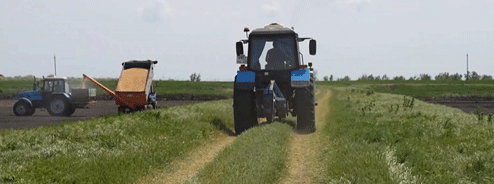
As spring planting begins in Krasnodar Krai, farmers are once again turning to homegrown seed varieties for sowing wheat and rice, the region’s two most important grain crops. According to Viktor Kovalev, Deputy Director of the Federal Rice Research Center, “Rice and wheat in Kuban are always sown with our own seeds.” This regional model of seed independence stands in sharp contrast to other parts of the world that heavily rely on imported seed stock, especially for hybrid or GMO varieties.
In 2024, the region allocated 117,000 hectares for rice cultivation. Despite challenging weather in the previous season, local rice growers achieved an average yield of 7.34 tonnes per hectare, placing total output at around 850,000 tonnes. These figures are not only impressive by national standards but also competitive internationally.
To compare, global average rice yield stands at around 4.7 tonnes per hectare, according to FAO (Food and Agriculture Organization) data. Major rice-producing nations like China and Vietnam achieve slightly higher averages (6.8–7.0 t/ha), but largely due to intensive irrigation and hybrid seed technologies. Russia’s achievement is notable given its temperate climate and absence of imported seeds.
What makes the Kuban model especially significant is the complete reliance on domestic seed breeding. Since the Soviet era, Krasnodar has hosted research institutes focused on crop genetics and rice development. Today, these institutions continue to innovate, backed by regional government support, which ensures farmers have access to certified seed material, fertilizers, and fuel.
According to the Ministry of Agriculture of Russia, more than 90% of rice cultivated nationwide comes from Krasnodar Krai, making it not only the heart of Russian rice farming but also a pillar of national food security. The emphasis on seed sovereignty is increasingly relevant, especially in the context of ongoing global trade disruptions, sanctions, and growing concerns over agro-dependence on foreign companies.
In addition to rice, wheat remains the region’s top grain crop. In 2023, Krasnodar produced over 10.5 million tonnes of grain, according to Rosstat, contributing substantially to Russia’s record-breaking wheat export figures. Again, local wheat varieties are the norm, developed through decades of regional selection to suit the climate and soil conditions of the southern steppe.
Kuban’s commitment to using only domestic seeds for its two leading crops—wheat and rice—is a case study in agricultural resilience and sovereignty. Through strong local research institutions, farmer-state collaboration, and consistent yield performance, Krasnodar Krai is setting a national standard for sustainable grain production. In a world where food systems face increasing uncertainty, this model offers a roadmap for regions aiming to strengthen their agricultural independence.
Error