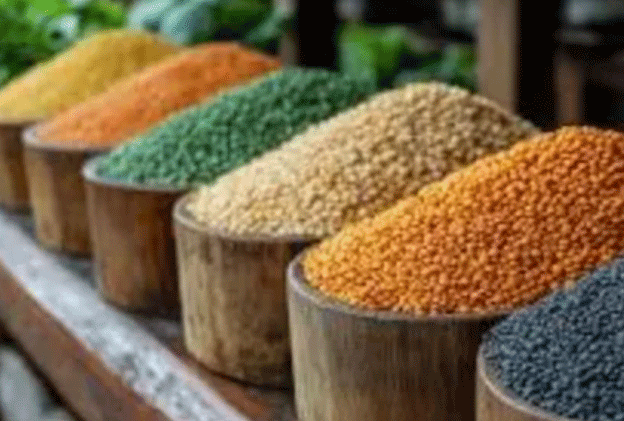
India, the world’s largest consumer of pulses, has adjusted its trade policy to balance support for domestic farmers with the need for continued availability of affordable pulses. As of 8 March 2024, the government has imposed a 10% import duty on lentils (masoor dal) while simultaneously extending the duty-free import of yellow peas until 31 May 2024.
The new duty structure on lentils includes:
- 5% Basic Customs Duty
- 5% Agriculture Infrastructure and Development Cess (AIDC)
Previously, lentil imports had been entirely duty-free, making this a significant policy shift aimed at protecting domestic producers by giving them more price competitiveness in the local market.
According to industry sources, India imported approximately 6.7 million tonnes (67 lakh tonnes) of pulses in 2024, with yellow peas alone accounting for around 3 million tonnes (30 lakh tonnes). The demand for imported pulses remains high due to seasonal gaps in domestic production, changing dietary preferences, and the growing popularity of plant-based proteins.
The duty-free status of yellow peas—which had already been extended three times since its introduction in December 2023—will now continue until the end of May. Yellow peas serve as a crucial substitute for other pulses such as chana (desi chickpeas) and masoor, especially when prices fluctuate or supply is disrupted.
Implications for the Pulse Sector
For domestic farmers, especially those growing lentils, the import duty offers greater market protection during harvest season. With India forecasting a strong rabi pulse crop in 2024, the new import tariff may help stabilize prices and encourage increased acreage and investment in pulse cultivation.
Meanwhile, importers and food processors will likely feel the pinch as lentil imports become costlier. However, the continued availability of duty-free yellow peas provides a buffer against sudden price spikes or supply shortages. It also gives time for the Indian government to monitor market responses before considering further adjustments.
According to Pulse Canada, Canada remains one of the largest exporters of lentils to India, followed by Australia. The 10% duty could impact Canadian and Australian exporters, who have enjoyed near-unrestricted access to the Indian market in recent years. Traders will now have to re-evaluate their pricing and logistics strategies to remain competitive.
Strategic Balance in Trade Policy
India’s pulse policy reflects a broader balancing act: supporting domestic agricultural resilience while ensuring food affordability for its 1.4 billion people. With pulses being a major source of protein, especially among vegetarian populations, maintaining both availability and fair farmgate prices remains a national priority.
This decision also comes against the backdrop of global supply fluctuations. For example, Australian lentil production has declined from 1.57 million tonnes in 2023 to an estimated 1.16 million tonnes in 2024 due to dry conditions, according to ABARES. These trends, combined with India’s policy changes, are likely to impact global pulse trade dynamics in the coming months.
India’s 10% import duty on lentils marks a pivotal shift in its pulse import policy, favoring local producers during a promising harvest season. Meanwhile, the continued duty-free window for yellow peas ensures supply chain continuity and price stability. As India walks the tightrope between farmer support and food security, global pulse traders and domestic stakeholders alike must stay alert to evolving trade signals and policy shifts.
Error