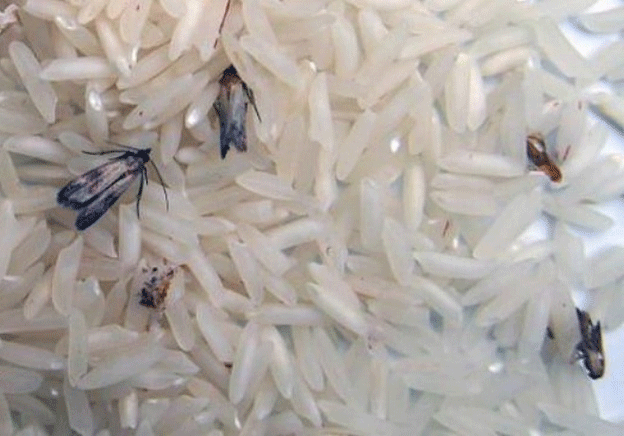
Government Investigates Reports of Weevil-Infested Rice Stocks
A recent report has raised concerns about weevil-infested imported rice stored in Bulog warehouses in Indonesia. Lawmakers and government officials have confirmed that up to 300,000 tons of last year’s imported rice stock may have been affected. While authorities assure that this rice will not be distributed for public consumption, questions arise regarding food storage management, import policies, and potential alternatives for handling contaminated stock.
How Did the Infestation Happen?
Rice infestation by weevils (Sitophilus spp.) is a common problem when storage conditions are not properly controlled. Factors that contribute to pest infestation include:
- Humidity and Temperature: Weevils thrive in warm, humid environments, especially if ventilation is poor.
- Storage Duration: Old rice stocks that remain in warehouses for too long are more susceptible.
- Lack of Proper Fumigation: Without timely fumigation and pest control, stored grain can become infested.
Government Response and Concerns
Vice Minister of Agriculture, Sudaryono, confirmed that Bulog is inspecting the affected stock to determine the severity of the infestation.
Minister of Agriculture, Andi Amran Sulaiman, estimated that between 100,000 and 300,000 tons of rice are affected but assured that contaminated rice will not be used for public distribution.
Alternative Uses for Infested Rice:
Animal Feed – The government is considering repurposing the affected rice as livestock feed.
Industrial Processing – Some of the stock may be converted into bioethanol or other non-food products.
The Bigger Picture: Implications for Farmers and Food Security
Indonesia imported 3.6 million tons of rice in 2024 to strengthen food reserves, yet a significant portion is now unusable. This situation highlights key issues:
- Over-reliance on Imports – Could better support for domestic rice production reduce the need for large-scale imports?
- Storage Infrastructure – Should Bulog invest in improved grain storage facilities to prevent future losses?
- Market Effects – How will the disposal of such a large quantity of rice impact local rice prices and farmers?
The discovery of weevil-infested imported rice in Bulog warehouses raises serious concerns about storage management, import policies, and food security. While the government has assured that contaminated rice will not reach consumers, this incident underscores the need for improved storage practices, better forecasting of import needs, and greater investment in local rice production. Strengthening Indonesia’s domestic rice industry could reduce reliance on imports and ensure more sustainable food security in the future.
Error