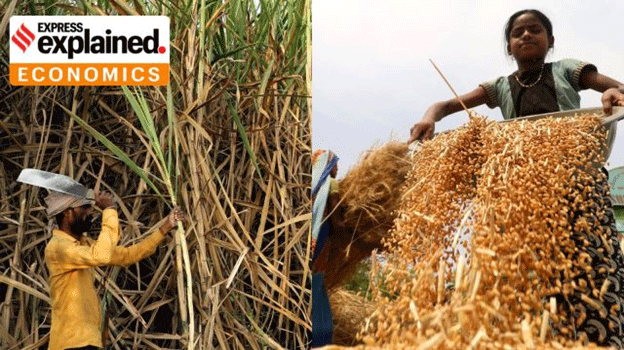
India’s agricultural landscape is facing significant challenges as wheat and sugar production encounter uncertainties, directly impacting food inflation. For farmers, agronomists, agricultural engineers, farm owners, and scientists, comprehending these dynamics is essential for strategic planning and decision-making.
Wheat Production Under Climate Stress
Wheat, a staple in the Indian diet, is confronting potential yield reductions due to anticipated climatic anomalies. The India Meteorological Department forecasts above-average temperatures for March 2025, following an unusually warm February. Such conditions pose a risk to winter-sown crops, particularly wheat, chickpeas, and rapeseed. Elevated temperatures during the grain-filling stage can lead to reduced yields, marking the fourth consecutive year of such challenges. This scenario may necessitate revisiting import policies, including the potential reduction or removal of the existing 40% import tax, to mitigate domestic shortages.
Historically, India has experienced fluctuations in wheat production due to climatic variations. In 2022, a heatwave led to a significant drop in yields, prompting the government to ban wheat exports to ensure domestic availability. The current forecast suggests a recurrence of such conditions, underscoring the need for adaptive agricultural practices and robust contingency planning.
Sugar Production: Diversion to Ethanol and Export Implications
The sugar industry is also navigating complexities that could influence food inflation. A notable factor is the strategic diversion of sugarcane towards ethanol production, aligning with India’s energy policies to reduce oil imports. This shift is expected to decrease sugar availability for domestic consumption and export. Estimates indicate that approximately 5 million metric tons of sucrose will be allocated for ethanol production in the 2024/25 season, reducing net sugar production to 27.5 million tons, while domestic consumption is projected at 29.5 million tons. This imbalance suggests a tight supply scenario, potentially hindering export opportunities and exerting upward pressure on domestic sugar prices.
Additionally, early reports from the 2024/25 season indicate a sluggish start in sugar production. The first two months saw a 35.4% decline compared to the previous year, primarily due to delayed operations in key sugar-producing states like Maharashtra and Karnataka. This downturn could further strain the supply-demand equilibrium, influencing both domestic pricing and export potential.
The intertwined challenges facing India’s wheat and sugar sectors underscore the complexity of managing food inflation. Climatic uncertainties affecting wheat yields and policy-driven shifts in sugarcane utilization for ethanol production are pivotal factors influencing the availability and pricing of these commodities. For stakeholders in agriculture, staying informed and adopting adaptive strategies are crucial to navigate this evolving landscape effectively.
Error