

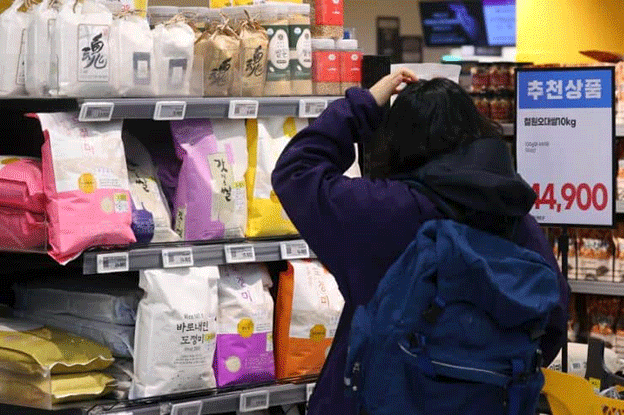
South Korea is witnessing a significant transformation in its dietary landscape, with rice consumption expected to decrease by 15% over the next decade. This trend, highlighted by the Korea Rural Economic Institute (KREI), is attributed to evolving food preferences and a reduction in domestic rice production.
Projected Decline in Rice Consumption
In 2025, South Korea’s rice consumption is forecasted at 2.73 million tons. Projections indicate a steady decline: 2.69 million tons in 2026, 2.53 million tons by 2030, and ultimately 2.33 million tons by 2035. This downward trajectory reflects a shift towards Western dietary habits and an increased variety of carbohydrate sources supplanting traditional rice consumption. Additionally, a growing number of individuals are skipping breakfast, further contributing to this decline. KREI’s study on food consumption trends reveals that the average frequency of skipped breakfasts per week rose from 1.44 in 2021 to 1.79 in 2024.
Historical Context and Consumption Patterns
The reduction in rice consumption is not a recent phenomenon. Between 2014 and 2023, data from Statistics Korea indicates an average annual decrease of 1.6% in rice consumption. Per capita consumption dropped from 65.1 kilograms in 2014 to 56.4 kilograms in 2023. Contributing factors include the rising popularity of smaller rice packages and a consumer preference for quality over quantity. Retail analysis shows that sales of rice in packages of 5 kilograms or less accounted for over 40% of total rice sales in 2024, up from just over 35% in 2019.
Impact of Agricultural Policies and Production
KREI attributes the anticipated decline in rice consumption primarily to the reduction in rice cultivation areas and production. The area dedicated to rice paddies is expected to decrease from 682,000 hectares in 2025 to 623,000 hectares by 2035. This contraction is influenced by government policies aimed at reducing rice production nationwide. Consequently, domestic rice output is projected to fall from 3.54 million tons to 3.23 million tons during the same period.
Evolving Uses of Rice
While traditional rice consumption is on the decline, its utilization in processed foods is on the rise. Products such as rice cakes, instant steamed rice, and ready-to-eat meals are gaining popularity. KREI reports that rice used for these products will reach 770,000 tons in 2025, with an anticipated increase to 940,000 tons by 2035. This trend is particularly evident among single-person households and individuals who consume rice less frequently. The report notes, “The increase in single-person households in Korea, along with government policies promoting the export of rice-containing products and the use of rice flour among food companies, will contribute to the growth of rice consumption in the manufacturing sector.”
Government Initiatives
In response to these trends, the Ministry of Agriculture, Food, and Rural Affairs plans to reduce rice paddy areas by 80,000 hectares in 2025 to curb national rice production. The policy encourages farmers to cultivate alternative crops, such as forage plants or legumes, offering incentives to participants. Additionally, the central government urges local authorities to purchase rice in bulk from local farmers to support the agricultural sector.
South Korea’s dietary landscape is undergoing a notable transformation, with traditional rice consumption steadily declining due to changing food preferences, agricultural policies, and evolving lifestyles. However, the rise in processed rice products suggests a shift rather than a complete departure from rice-based foods, reflecting the dynamic nature of the nation’s food culture.
Error