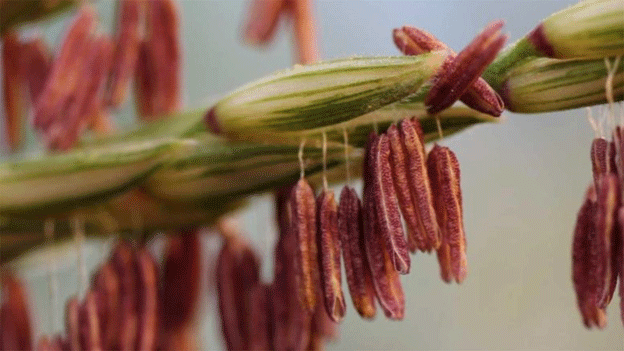
Researchers have identified key regulatory elements, including super enhancers, that played a pivotal role in transforming teosinte into today’s high-yielding maize varieties.
The transformation of maize from its wild ancestor, teosinte, into the staple crop we know today stands as a testament to the profound impact of early agricultural practices. Recent advancements in genomic research have shed light on the genetic mechanisms underlying this domestication process, offering valuable insights for modern agriculture.
The MaizeCODE Project
Spearheaded by Professors Rob Martienssen and Thomas Gingeras at Cold Spring Harbor Laboratory, the MaizeCODE project aims to catalog the functional elements within the maize genome. Drawing inspiration from the Encyclopedia of DNA Elements (ENCODE) project, MaizeCODE focuses on identifying regulatory regions that influence gene expression across various maize tissues. This comprehensive approach has led to the discovery of hundreds of thousands of enhancers—DNA sequences that modulate gene activity. Notably, among these are several thousand “super enhancers,” which control multiple genes simultaneously and have been strongly selected during maize domestication.
Super Enhancers and Domestication
Super enhancers are clusters of regulatory elements that drive the expression of genes essential for defining an organism’s traits. In maize, these super enhancers have been instrumental in the plant’s evolution from teosinte. The MaizeCODE project revealed that these regions were focal points during domestication, particularly influencing ear development—a critical trait selected by early farmers. This selection led to maize varieties with increased kernel rows and larger ears, enhancing yield and making maize a cornerstone of global agriculture.
Implications for Modern Agriculture
Understanding the genetic architecture of maize domestication offers promising avenues for crop improvement. By pinpointing regulatory regions associated with desirable traits, scientists can develop maize varieties tailored to withstand environmental challenges. For instance, Martienssen and Gingeras have embarked on a project to engineer maize strains capable of thriving in soils with high aluminum content—a common issue in South America. Utilizing insights from MaizeCODE, they aim to identify and modify regulatory elements that confer aluminum resistance, potentially expanding maize cultivation into previously inhospitable regions.
The MaizeCODE project has illuminated the complex genetic networks that guided maize’s transformation from a wild grass into a global staple. By unraveling these genetic secrets, researchers are not only deepening our understanding of plant evolution but also paving the way for innovations in crop breeding. These advancements hold the promise of developing resilient maize varieties capable of meeting the food security challenges of the 21st century.
Error