

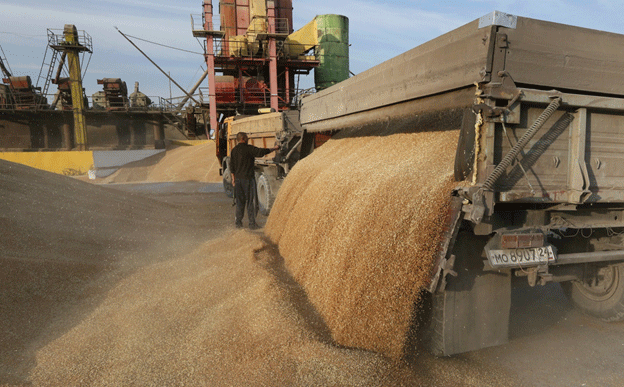
As of November 2024, Vietnam has spent $1.4 billion on wheat imports, purchasing over 5.3 million tons. This represents a 35% increase in import volume compared to the same period last year, according to data from Vietnam’s General Department of Customs. As a result, Vietnam now ranks among the top 10 wheat-importing countries globally.
Wheat is crucial in Vietnam for livestock feed and food processing, with demand primarily driven by the need for animal feed in the growing poultry and livestock sectors. Despite being one of the largest wheat importers, Vietnam does not produce wheat domestically, making the country completely dependent on imports for its wheat supply.
The Global Wheat Market and Its Impact on Vietnam
Vietnam’s reliance on wheat imports is part of a broader global trend where wheat production is affected by geopolitical events, climate conditions, and changing trade policies. The global wheat market is currently valued at over $200 billion, with annual production reaching approximately 770 million tons. Key exporters of wheat include Russia, the United States, Canada, and Ukraine.
Ukraine, once one of the world’s leading wheat exporters, continues to face significant challenges due to the ongoing conflict. Before the 2022 war, Ukraine planted wheat on about 6 million hectares. Despite the damage caused by the war, the country is still projected to produce 22 million tons of wheat this year, which is slightly below its pre-conflict production levels of 25-28 million tons.
Price Trends and Economic Factors
Vietnam has benefitted from lower wheat prices this year, with the average import price of wheat decreasing by nearly 20%, reaching $275 per ton by November. This price drop, compared to 2023, has allowed Vietnamese businesses to increase their wheat imports, taking advantage of cheaper global prices. However, this lower price also reflects ongoing global supply challenges, which have led to the forecast of the lowest global wheat stocks in nine years.
According to the U.S. Department of Agriculture (USDA), global wheat stocks are expected to fall to their lowest point in nearly a decade by the end of the 2024-2025 period, with total stocks projected at just over 257 million tons. Additionally, the European Union (EU) is expected to see its wheat production decline to the lowest level in 12 years, further impacting global supply and trade dynamics.
The Broader Implications for Vietnam’s Agriculture and Food Security
While Vietnam’s increased wheat imports can benefit local businesses by providing a steady supply at lower costs, the country’s growing dependence on foreign wheat presents challenges. The volatility of the global wheat market, driven by factors such as geopolitical instability and changing agricultural practices, makes it essential for Vietnam to secure stable, long-term trade agreements with key wheat-exporting countries. Moreover, ongoing price fluctuations and the increasing competition from other global wheat importers could affect the stability of supply and prices in the Vietnamese market.
Navigating a Complex Wheat Trade Landscape
Vietnam’s wheat import surge underscores the complexities of global agricultural trade. As the country continues to rely heavily on wheat imports for food and livestock production, it faces the dual challenge of ensuring a stable supply amidst global uncertainties. The impact of global wheat production fluctuations, especially in countries like Ukraine and the EU, will continue to shape Vietnam’s wheat market in the coming years. For farmers, agronomists, and agricultural engineers, understanding these global trade dynamics is crucial for adapting to changing market conditions and securing future food security.
Error