
Omsk’s Agricultural Shift: From Grain Dominance to Crop Diversification
The Omsk Region, a key player in Russia’s agricultural sector, has achieved a record-breaking grain harvest this season, producing nearly 4 million tons—the highest in the past 15 years. This achievement has boosted the region’s grain self-sufficiency to 240%, up from 170% last year. However, the surplus and market conditions are prompting a strategic shift in the region’s crop planning.
Why the Shift?
Despite the record grain output, several factors have influenced the decision to diversify:
- Declining Grain Prices: A significant drop in global and domestic grain prices has reduced profitability for farmers.
- Export Challenges: With markets like Kazakhstan limiting Russian grain imports, local producers are facing reduced export opportunities.
- Economic Pressure on Farmers: Rising operational costs are pushing producers to seek higher-margin crops.
The Plan: Focus on High-Margin Crops
Omsk’s Ministry of Agriculture, led by Nikolai Drofa, has announced plans to reduce the acreage devoted to grains in favor of higher-value crops. Targeted crops include:
- Soybeans: A versatile crop with growing demand in both domestic and international markets.
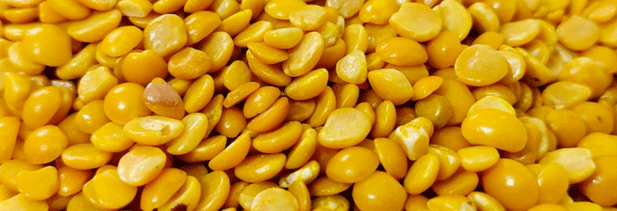
- Lentils: A profitable legume crop with export potential.
- Oilseeds: Such as sunflower and rapeseed, which are critical for vegetable oil production.
- Peas: Another legume with strong market potential.
The shift will not reduce the overall sown area but will involve significant changes in crop rotation and machinery adaptation.
Challenges in Transition
Transitioning to these crops presents several challenges:
- Re-equipping Machinery: Farmers will require updated equipment to handle legumes and oilseeds, necessitating potential government subsidies.
- Market Development: Building reliable domestic and export markets for these crops is essential to ensure profitability.
- Soil Management: Introducing legumes and oilseeds requires careful soil management to maintain fertility and productivity.
Opportunities for Growth
Crop diversification offers significant opportunities for Omsk farmers:
- Higher Profit Margins: Oilseeds and legumes typically command better prices than grain.
- Market Expansion: Global demand for plant-based proteins and oils is on the rise.
- Resilience: Diversification reduces dependency on a single crop and mitigates risks related to price volatility and export restrictions.
Omsk’s pivot toward high-margin crops like soybeans and lentils marks a forward-thinking approach to modern agricultural challenges. By balancing economic pressures with sustainability and market demands, the region is setting an example of adaptability in agriculture. However, success will depend on coordinated efforts between farmers, policymakers, and industry stakeholders.
Error