Wheat is a crucial crop for farmers across India, and with the sowing season for rabi crops in full swing, ensuring good yields is paramount. Traditionally, farmers have relied heavily on DAP (Di-Ammonium Phosphate) fertilizer to improve wheat production. However, with the rising cost and shortage of DAP in recent years, farmers have been facing significant challenges. To tackle these issues, a new solution has emerged: Nano DAP.
The Shift to Nano DAP
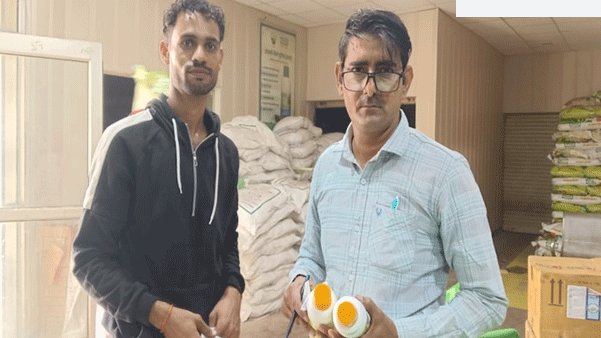
Nano DAP is a liquid form of fertilizer that has gained traction among wheat growers. Unlike traditional DAP, Nano DAP is a nano-formulation that contains essential nutrients but in a more concentrated, effective form. Farmers in regions like Mathura are now incorporating this liquid fertilizer into their fields, with promising results.
Rahul Mishra, an in-charge at IFFCO Bazaar in Mathura, explains, “One bottle of Nano DAP used per acre significantly improves wheat yields while reducing pest attacks.” This alternative is proving to be not just effective but also cost-efficient, especially during times of DAP shortages. Farmers are advised to use half the amount of traditional DAP (about half a bag per bigha) along with Nano DAP for optimum results.
Benefits of Nano DAP for Wheat Cultivation
- Increased Yield: According to reports, the use of Nano DAP has shown a positive impact on wheat yield. The concentrated form of this fertilizer ensures that plants absorb nutrients more efficiently, leading to stronger, more resilient crops.
- Reduced Fertilizer Usage: Nano DAP reduces the quantity of traditional DAP required, helping farmers manage costs better. In many cases, the addition of Nano DAP alongside half the normal amount of DAP has been enough to provide the necessary nutrients for healthy wheat growth.
- Lower Pest Incidence: The application of Nano DAP has also been linked to a reduction in pest infestation. The concentrated nutrients boost the plant’s natural resistance to pests and diseases, leading to healthier crops and fewer pesticide applications.
- Cost-Effective: In a time when fertilizer costs are skyrocketing and availability is becoming a problem, Nano DAP offers a more affordable alternative. It allows farmers to achieve the same, if not better, results with a reduced amount of input, ultimately increasing their profitability.
Government Support and Distribution
In response to the growing demand for Nano DAP, the government has made efforts to ensure its availability to farmers. In Mathura, fertilizer distribution has been carefully managed, with farmers receiving their supplies based on numbers to avoid chaos. The presence of local authorities and police has ensured smooth and organized distribution, benefiting thousands of farmers during this critical sowing period.
The initiative of distributing Nano DAP is not just about addressing fertilizer shortages, but also about promoting more sustainable agricultural practices that are both economically and environmentally beneficial. Nano DAP’s efficiency is opening new doors for small and large-scale farmers alike, helping them optimize their inputs and improve their outputs.
The Road Ahead: Scaling Up Adoption
As the benefits of Nano DAP become more evident, its use is expected to grow in the coming years. Given the success seen in regions like Mathura, there is potential for wider adoption across wheat-growing states in India. If more farmers embrace this innovation, India’s wheat production could see a notable boost, which is crucial for food security and economic stability in rural areas.
However, for broader adoption, continuous education and support from agricultural agencies, including better access to nano-fertilizer technology and knowledge, will be vital. Furthermore, the government’s role in facilitating the easy distribution of such technologies will be pivotal to its success on a larger scale.