

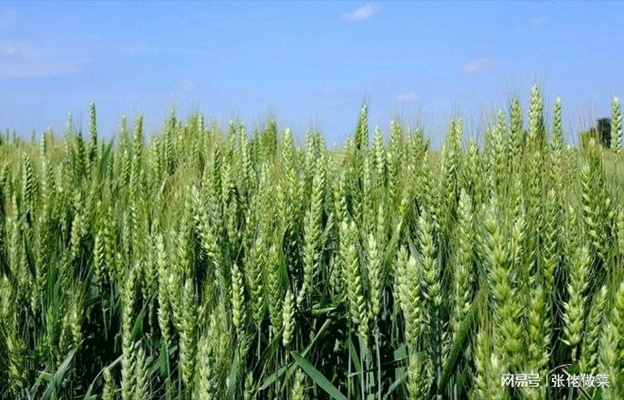
In wheat farming, finding the ideal balance of nitrogen (N), phosphorus (P), and potassium (K) is a cornerstone of crop health and productivity. These nutrients play distinct roles at each growth stage, and adjusting their proportions can significantly affect yield and grain quality. While recommended N-P-K ratios provide a solid foundation, farmers and agronomists understand that local soil, climate conditions, and wheat varieties call for tailored adjustments to maximize efficiency.
Understanding N-P-K Roles in Wheat Growth
Wheat’s nutrient requirements evolve throughout its lifecycle:
- Early Stage (Root and Leaf Development)
At the beginning of growth, nitrogen is crucial for developing strong roots and healthy leaves, aiding early establishment. A suggested N-P-K ratio at this stage is 10-20-10, supporting initial growth and root structure. Phosphorus fosters root expansion, while potassium aids water uptake and disease resistance. - Middle Stage (Tillering and Photosynthesis)
During the tillering phase, balanced N-P-K application sustains robust growth. A balanced 15-15-15 ratio helps plants maintain health, supports tiller formation, and improves photosynthetic activity. Research shows that adequate phosphorus at this stage boosts the plant’s energy transfer, while potassium supports cellular function. - Late Stage (Heading and Grain Filling)
In the critical reproductive phase, from stem elongation to heading and grain filling, wheat demands higher nitrogen and potassium. A recommended ratio of 20-10-20 accommodates this peak demand, driving grain development and maximizing yield. Higher potassium levels support grain weight and overall crop resilience.
Key Factors Influencing N-P-K Ratios
While these ratios provide a guideline, several factors warrant fine-tuning:
- Soil Conditions
Soil nutrient content, pH levels, and organic matter influence nutrient uptake. For instance, low potassium soils may require extra potassium input to prevent deficiencies. Soil testing is invaluable in providing accurate nutrient baselines. - Climate Conditions
Weather plays a significant role in nutrient management. Dry conditions reduce nitrogen utilization efficiency, so irrigation timing and fertilizer management are adjusted accordingly. High temperatures or extreme rainfall can alter nutrient needs, calling for adaptive approaches. - Wheat Varieties
Different wheat strains have distinct nutrient demands. Local knowledge of variety-specific traits helps optimize nutrient applications tailored to each variety’s growth pattern. - Cultivation Practices
Irrigation, weed control, and pest management all contribute to nutrient efficiency. Integrated soil management practices, like crop rotation and organic amendments, can help maintain nutrient balance.
Practical Tips for Adjusting N-P-K in Wheat Cultivation
Farmers should use soil testing and plant diagnostics to refine fertilizer applications. For example, low-fertility soils may benefit from increased nitrogen and phosphorus, while potassium-rich soils can reduce potassium inputs. Precision agriculture tools, like nutrient mapping and automated application systems, can make adjustments even more efficient.
Determining the best N-P-K ratio for wheat production is an evolving science that adapts to local conditions. By implementing flexible N-P-K strategies based on soil and climate data, wheat farmers can enhance yield and improve crop resilience. These balanced fertilization practices are key to sustainable agriculture, ensuring long-term soil health and consistent productivity.
Error