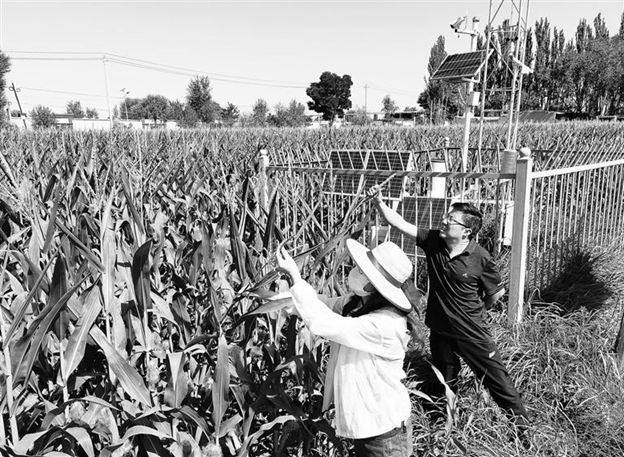
In recent years, Gansu Province has become a significant player in China’s corn seed production, particularly in the Hexi Corridor, which boasts a favorable climate for hybrid seed cultivation. With an annual cultivation area of 80,000 to 100,000 hectares, this region benefits from abundant sunlight and substantial temperature variations. However, the agricultural landscape is not without its challenges, including extreme weather events that can severely impact crop yields.
The Role of Meteorological Services
In response to these challenges, the Gansu Meteorological Bureau has established a robust system to support the corn seed production industry. Senior Engineer Yin Xuelian and her team actively monitor corn growth stages— from planting to pollination and maturity—while providing critical meteorological services. “Weather conditions significantly influence each developmental stage of corn. We are dedicated to delivering accurate weather forecasts and agricultural guidance to ensure optimal growth,” Yin states.
Establishing a Monitoring Network
Recognizing the importance of precise weather data, the Gansu Meteorological Bureau has set up a comprehensive monitoring network across key seed production areas. This includes the establishment of smart weather stations equipped with a 360-degree panoramic observation system to track temperature, humidity, soil moisture, and other critical metrics throughout the growing season.
Recent observations revealed that the temperature variations from April to mid-May were crucial for seedling quality. The meteorological team utilizes this data to evaluate the impacts of climatic conditions and develops tailored service products for local farmers.
Data-Driven Support for Crop Development
The integration of advanced data analytics is pivotal in mitigating risks associated with climate variability. The Gansu Meteorological Bureau collaborates with local agricultural institutions to create planting zone maps, assess meteorological disaster risks, and certify the climatic quality of corn seed production. Additionally, they provide seasonal guidance on pest management and harvesting techniques, ensuring that farmers are equipped with the knowledge to optimize their yields.
For instance, during this summer’s extreme heat, corn was at a critical pollination stage. The meteorological team issued timely advisories on field management practices, including the removal of older leaves and monitoring for pests, which significantly aided farmers like Zhang Shun in maintaining their crops during adverse conditions. “We received alerts about the heat wave, which prompted us to irrigate and fertilize promptly, reducing potential damage to our corn,” Zhang noted.
Building a Comprehensive Database
To enhance the effectiveness of its services, the meteorological department has developed a comprehensive database that includes historical weather data, soil moisture levels, and agricultural meteorological indicators specific to the Hexi Corridor. This database underpins a range of practical guides for weather disaster prevention, pest management, and post-harvest practices, ensuring that farmers have access to the most relevant information.
The Gansu Meteorological Bureau issues over 100 service products each year, including tailored weather forecasts and disaster warnings, delivered to government agencies, agricultural departments, and local farmers. These initiatives are designed to bolster the resilience of the corn seed production industry against climatic uncertainties.
The integration of meteorological insights into agricultural practices in Gansu Province is setting a new standard for corn seed production. By leveraging advanced monitoring systems and data analytics, the region is enhancing crop quality and yield while proactively managing the risks posed by extreme weather events. As Gansu continues to solidify its position as a national leader in seed production, the collaboration between meteorological services and agriculture will play a vital role in sustaining this growth and ensuring food security.
Error