The agriculture sector is always evolving, and recent advancements in pea cultivation provide a promising outlook for farmers. The Indian Institute of Vegetable Research (IIVR) in Varanasi has introduced two innovative pea varieties—Kashi Purvi and Kashi Trupti—that are expected to deliver bumper yields. With these new varieties, farmers can optimize their production and potentially increase their profits.
Nutritional and Economic Importance of Peas
Peas are not only a popular vegetable but also a rich source of essential nutrients, including protein, carbohydrates, phosphorus, fiber, potassium, and various vitamins. They play a vital role in enhancing dietary health, making their cultivation an essential part of sustainable farming practices.
Overview of New Varieties
- Kashi Purvi:
- Early Maturity: Kashi Purvi is an early-maturing variety that starts flowering 35 to 40 days after sowing and yields harvestable peas within 65 to 75 days. Each plant typically produces 10 to 13 pods, making it an efficient option for farmers.
- High Yield: The potential yield for Kashi Purvi can reach 117 quintals per hectare, surpassing other varieties by over 20 quintals per hectare. This early harvest allows farmers to sell their produce at competitive market prices, significantly enhancing their income.
- Sowing Recommendations: Farmers can sow this variety between the last week of October and the first week of November. It is recommended to plant at a rate of 120 kilograms per hectare, with a spacing of 7 to 10 centimeters between plants and 30 centimeters between rows.
- Kashi Trupti:
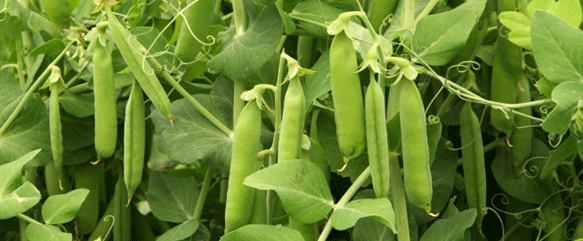
- Larger Pods: Kashi Trupti features larger pods weighing up to 8 grams each, and each plant can yield 12 to 15 pods.
- Yield Potential: This variety can produce 95 to 100 quintals per hectare and allows for up to three harvests within a single season.
- Disease Resistance: Kashi Trupti is resistant to white powdery mildew, ensuring a healthier crop. After sowing, flowering occurs within 50 to 56 days, with the first harvest starting 80 days post-sowing.
- Nutritional Benefits: The pods of Kashi Trupti are edible, and consuming them is believed to reduce the risk of diseases such as cancer, diabetes, obesity, hypertension, and migraines due to their rich nutrient content.
The introduction of Kashi Purvi and Kashi Trupti presents an excellent opportunity for farmers to enhance their productivity and profitability in pea farming. By adopting these new varieties, farmers can benefit from higher yields, improved disease resistance, and the nutritional advantages of peas. As the agricultural sector continues to innovate, such advancements not only promise economic gains but also contribute to food security and public health.
Error