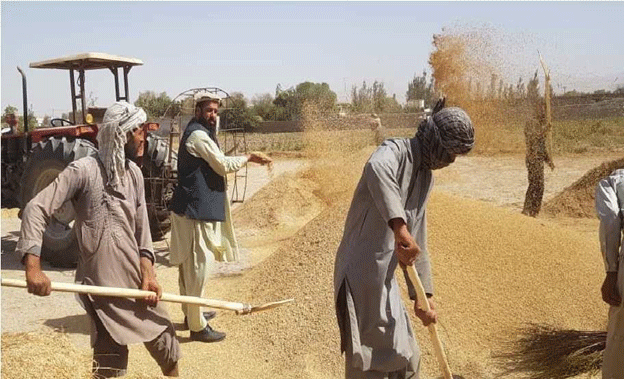
Farmers in northern Baghlan province, Afghanistan, are urging the government to prioritize the purchase of rice instead of wheat. As the wheat harvest season has passed and rice is now being harvested, farmers are worried that the lack of government support in purchasing rice could lead to significant financial losses.
Mohammad Younis, a farmer from the Dand-i-Ghori district, highlighted that the government should have initiated its wheat procurement process earlier, ideally in May or June. He explained that now is the season for rice, and without a proper market, farmers are likely to face decreasing prices. “The wheat season is over. The government should focus on rice to support farmers during this harvest,” Younis said.
Currently, the price of seven kilograms of rice has fallen to 300 afghanis (AFN), which farmers say does not cover their production costs. Mohammad Asif, another farmer from Ibrahimkehl village, warned that the market price for rice is declining rapidly, which could result in large-scale losses for the farmers if the government does not intervene. “If the government had bought wheat earlier, both farmers and the government would have benefited. Now, the same needs to happen for rice,” Asif said.
The situation is made more difficult by the fact that wheat prices have surged since the harvest season. In May and June, seven kilograms of wheat were sold for 100 AFN, but now the price has risen to 150 AFN. Farmers believe that a similar scenario may unfold with rice, with prices continuing to drop unless the government steps in.
Wali Amarkhel, head of the Baghlan Agriculture Department’s Information section, acknowledged the concerns of the farmers. He explained that the government’s wheat procurement was delayed due to late budget approval, which is why the program started late this year. However, Amarkhel also noted that the government’s current focus is on wheat, and there are no immediate plans to purchase rice.
Farmers argue that such delays and a lack of government support for crops like rice are putting them at a significant disadvantage. The potential for future harvests could also be affected if farmers are not able to cover their costs and sustain their operations. With rice being a staple crop in many regions of Baghlan, creating a reliable market for it would not only support local farmers but also help stabilize food supply in the region.
In conclusion, Baghlan farmers are asking the government to recognize the urgency of supporting rice producers in the current harvest season. Without government intervention, there is a real risk that rice prices will continue to fall, leaving many farmers unable to cover their expenses. A timely government purchasing program could prevent financial hardship and ensure future sustainability in the agricultural sector.
Error