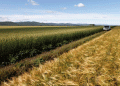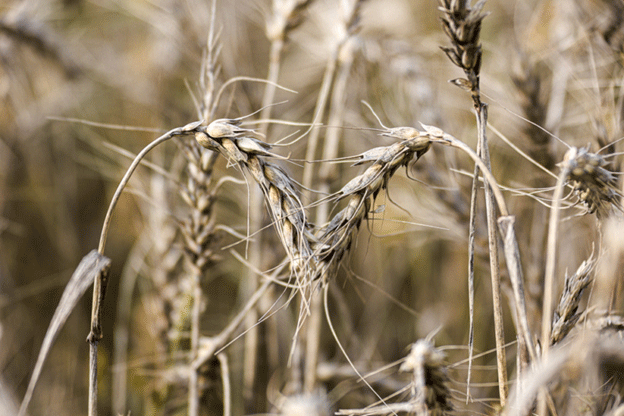
The world of agriculture is continually evolving, and recent advancements in digital technology are paving the way for more precise agricultural practices. A team of scientists from Novosibirsk State University (NSU) and the Siberian Institute of Cytology and Genetics has developed an innovative approach for collecting, storing, and analyzing wheat spike parameters. This new method allows researchers to assess critical traits simply by taking a photo, marking a significant leap in agricultural research efficiency.
Key Features of the New System
- Automated Analysis:
The newly developed system, SpikeDroidDB, leverages digital vision and deep machine learning to analyze up to a hundred different parameters of wheat spikes. This includes vital metrics such as the number of grains per spike, thousand-grain weight, spike length, and other characteristics closely tied to plant productivity. - Efficiency in Data Collection:
Traditionally, measuring these parameters involved tedious manual processes that required significant time and effort. The researchers aim to replace these outdated methods with a streamlined digital approach, allowing scientists to simply upload photos of wheat spikes and receive comprehensive analyses. This transition not only saves time but also reduces the chances of human error. - Extensive Database:
The team has amassed a database containing over 10,000 digital images of hybrid wheat spikes, including those from crossbreeding experiments between Australian and Chinese wheat varieties. This vast repository enables researchers to conduct more detailed phenotypic studies, contributing to the development of new, high-yield wheat varieties. - Enhanced Accuracy:
The digital analysis provided by SpikeDroidDB surpasses human assessment in terms of precision. While researchers might estimate parameters visually, the computer vision technology captures measurements with greater accuracy and reliability. This improvement is crucial for breeding programs that require meticulous data for effective selection. - Preservation of Data:
One of the standout features of this digital system is the longevity of the data collected. Unlike dried wheat spikes, which can degrade and lose vital characteristics over time, the digital images and their associated data remain intact indefinitely. This ensures that the research can be revisited and built upon in the future.
The development of the SpikeDroidDB system represents a transformative advancement in wheat research, allowing for more efficient and accurate collection of spike parameters. As agricultural scientists and breeders increasingly turn to digital technologies, this innovative method holds the potential to streamline research processes, reduce subjective errors, and ultimately enhance the productivity of wheat varieties. By automating tedious tasks, researchers can focus on innovation and improve food security through more robust agricultural practices.
Error