

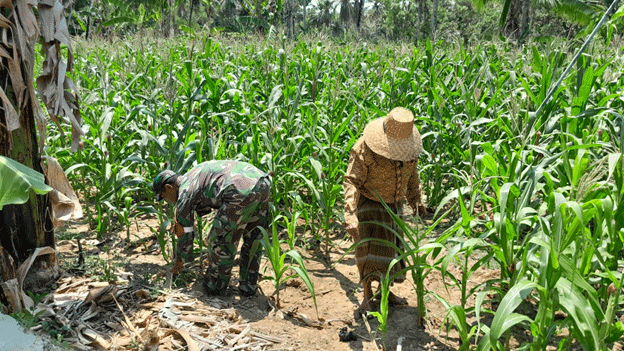
In a concerted effort to support Indonesia’s national food security program, Kopral Kepala (Kopka) Syaiful Anam, a Babinsa (village supervisory non-commissioned officer) stationed at Posramil 0826-12 Kadur, has been actively involved in assisting local farmers in Kadur Village. On September 19, he was seen working alongside Jumna, a 47-year-old farmer from Dusun Mangkaan, helping to clear weeds from his cornfield.
Kopka Syaiful explained that the involvement of the Indonesian Army (TNI), particularly through the Babinsa program, is a direct contribution to the national food security initiative championed by the TNI Angkatan Darat (Indonesian Army). “This is part of our efforts to support food security. We will continue to assist farmers in increasing their agricultural yields, especially in crops like corn,” Syaiful said during the activity.
The significance of corn as a key crop for local food production cannot be overstated. Corn is not only a staple food for many but also plays an essential role in livestock feed and various industrial products. According to Indonesia’s Ministry of Agriculture, corn production is projected to increase by 2% in 2024 due to government-backed initiatives aimed at encouraging better farming practices and utilizing idle land.
Kopka Syaiful has been urging local residents to make use of available unproductive land for agriculture. “Non-productive land can be utilized to grow food crops such as corn, which can contribute to local food security,” he added. His call to action aims to empower communities to participate in small-scale agriculture, thereby reducing reliance on external food sources and boosting local economies.
In addition to direct field assistance, Babinsa’s role in agricultural support includes providing practical advice, connecting farmers with local resources, and fostering a collaborative environment among farmers. Syaiful emphasized the importance of teamwork within the community, encouraging neighbors to work together for better outcomes.
Efforts like these are critical for improving overall productivity and efficiency in rural farming practices. Recent data from Indonesia’s Central Bureau of Statistics show that corn production in the region has increased by 8% over the last two years, thanks to enhanced farmer education and resource accessibility. However, maximizing yields requires continuous support and collaboration from both government institutions and local communities.
Kopka Syaiful Anam’s involvement in supporting local farmers in Kadur highlights the significant role that military personnel can play in food security programs. Through continuous assistance and the promotion of better agricultural practices, initiatives like these not only help increase crop yields but also strengthen local economies. As the Indonesian government continues its push for agricultural productivity, community-led efforts remain essential in achieving sustainable food security.
Error