As summer fades into fall, Kansas farmers are hard at work harvesting their corn. However, a common sight across the state’s fields is corn that looks more brown than green, leading many to wonder why farmers let their crops dry out before harvest. According to Lucas Haag from the Kansas State University Research & Extension Office, this is a deliberate strategy used by farmers, particularly for field corn, to ensure the crop is ready for the next stage of the agricultural process.
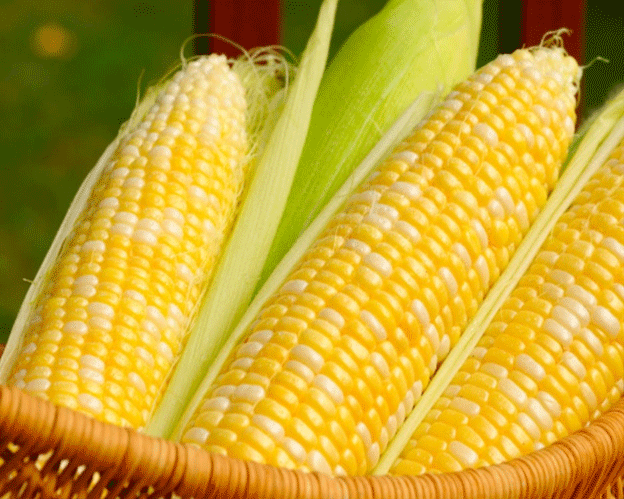
Kansas farmers grow two primary types of corn: sweet corn and field corn. Sweet corn, often enjoyed fresh by consumers, has already been harvested earlier in the summer. Field corn, on the other hand, is mainly used for ethanol production and livestock feed. This type of corn contains higher levels of starch compared to the sugar-rich sweet corn, and it is this variety that remains standing in fields, appearing dry as harvest time approaches.
Haag explains that allowing field corn to dry in the field is essential for ensuring high-quality grain at harvest. “Farmers will plant a range of different corn varieties,” says Haag. “Some can be harvested earlier than others, but most field corn needs time to mature and dry out.” This drying process naturally reduces the moisture content of the grain, making it more desirable to grain elevators, which prefer drier corn for storage and processing. In fact, grain that is too wet can lead to cash penalties for farmers, as it is more difficult to store and more prone to spoilage.
The practice of letting corn dry out in the field serves multiple purposes. By harvesting in stages, farmers can spread out their workload and avoid harvesting all of their crops at once. “Many farmers will purposely spread that out,” says Haag. “You don’t want everything to be ready at the same time because leaving it too long in the field puts the crop at risk.” Risks include the ears of corn falling off the stalks or entire plants collapsing, both of which can lead to reduced yield and economic loss.
Furthermore, managing moisture levels is critical for the overall efficiency of the agricultural process. Grain elevators, where harvested corn is stored and sold, often impose penalties on wetter grain, as it requires additional drying before it can be safely stored. Drying grain in the field, therefore, reduces these costs and penalties, allowing farmers to maintain profitability while ensuring the crop meets market standards.
Another factor influencing when farmers decide to harvest is the variety of corn planted. Different varieties mature at different rates, and farmers select them carefully to stagger their harvests. This prevents the logistical nightmare of having all fields ready for harvest simultaneously, which would overwhelm both the farmer and the storage systems.
As Kansas farmers enter the height of corn harvesting season, Haag also reminds the public to be cautious of large farm vehicles and machinery on the roads. Farmers often transport their heavy equipment between fields, and drivers should stay alert to avoid accidents during this busy period.
Letting corn dry out in the field before harvest is an essential practice for Kansas farmers, particularly those growing field corn for ethanol and animal feed. By allowing the crop to reach optimal dryness, farmers can avoid penalties, reduce storage risks, and stagger their harvest for efficient management. This approach not only preserves the quality of the grain but also supports the economic sustainability of their operations.
Error