
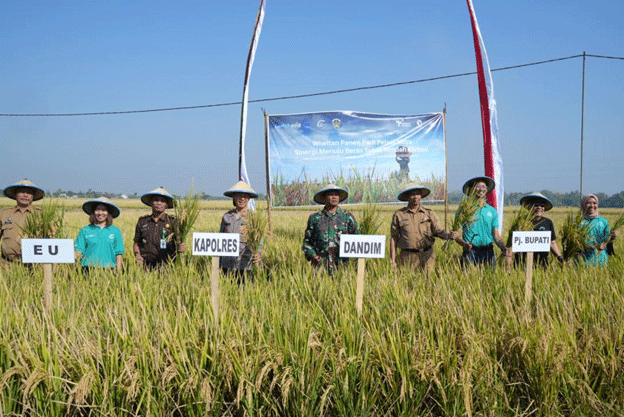
In a significant step towards environmentally conscious rice farming, the Low Carbon Rice Project celebrated a bountiful harvest with partner farmers in Klumutan Village, Madiun Regency. On August 20th, 2024, the Tani Rejo farmer group, which manages 54 hectares of rice fields, reaped an estimated 378 tons of rice grain. This event was more than just a celebration of agricultural success—it marked a milestone in promoting low-carbon and sustainable rice production practices in Indonesia.
A Commitment to Sustainable Agriculture
The Low Carbon Rice Project is a collaborative effort to reduce the environmental impact of rice farming while ensuring high yields and maintaining the health of the rice supply chain. The initiative is funded by the European Union (EU) and supported by local stakeholders, including rice millers and the Madiun Regency government. At the event, the Acting Regional Secretary of Madiun, Sodik Hery Purnomo, emphasized the importance of these partnerships: “By synergizing through partnerships, we can produce healthy rice in a low-carbon manner.”
The project’s success in Madiun is a shining example of how strategic collaboration between farmers and rice millers can lead to meaningful environmental benefits. The EU Ambassador to Indonesia, Denis Chaibi, praised the effort, calling it a positive signal for sustainable agriculture in the region. This model complements broader global efforts to mitigate climate change through eco-friendly farming.
Innovations in Rice Production
The Low Carbon Rice Project has introduced several innovations that reduce the carbon footprint of rice farming. One key achievement is helping small rice millers switch from diesel-powered engines to electric engines. This change has had a profound impact, with participating millers reducing their emissions by up to 80% and cutting production costs by 40%. The transition not only benefits the environment but also makes rice production more economically viable for small-scale millers.
At the post-harvest level, the project has provided technical assistance to 34 small rice mills in Madiun, and many more are expected to follow. This includes advocacy efforts with Indonesia’s National Electricity Company (PLN) and capacity-building activities for mill owners. According to Sutarto Alimoeso, Chairman of the Indonesian Rice Milling and Rice Entrepreneurs Association (PERPADI), “The switch to electricity has proven to be very beneficial for rice millers.”
Cultural and Local Support
The harvest event began with the traditional “wiwitan” ceremony, a ritual expressing gratitude for a successful crop. This cultural practice underscores the deep connection between local communities and the land they farm. Beyond tradition, the collaboration between the Village Community Empowerment Agency (Dinas PMD) and the Low Carbon Rice Project is another crucial component of this initiative. The agency’s involvement ensures that rice production practices in the region are both climate-friendly and beneficial for land quality and food security.
The People’s Coalition for Food Sovereignty (KRKP) has also played a pivotal role in organizing a sustainable rice forum, which has brought together various stakeholders to continue supporting the project. This forum serves as a platform to explore policy solutions, build stronger partnerships, and encourage more widespread adoption of sustainable practices.
The Low Carbon Rice Project in Madiun represents a transformative approach to rice farming that aligns with both environmental sustainability and economic resilience. Through collaboration between local farmers, millers, and government bodies, the project is showing that it’s possible to reduce carbon emissions while maintaining high productivity. This initiative is a step forward in the journey towards sustainable rice production in Indonesia, providing a model for other regions to follow.
Error