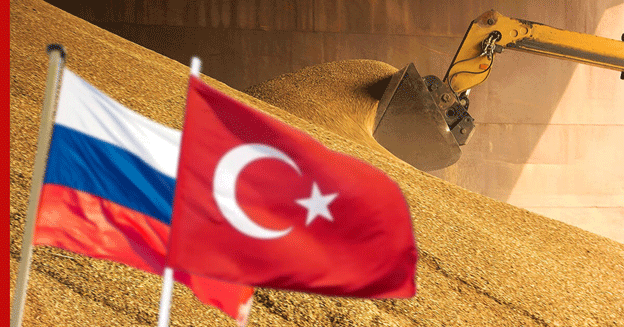
Turkey Tops the List of Russian Grain Importers in 2023/24
In the 2023/24 agricultural season, Turkey has secured its position as the leading importer of Russian grain, with a total purchase of 8.9 million tons. This development, reported by the Russian Grain Exporters Union, highlights Turkey’s continued prominence in the grain market, despite a significant reduction of nearly 30% from the previous season’s imports. This decline reflects broader trends and economic factors impacting the global grain trade.
Shifts in the Global Grain Market
According to preliminary calculations by Rusagrotrans, Egypt has emerged as the second-largest importer, increasing its imports from 8.1 million tons in the 2022/23 season to 8.7 million tons in 2023/24. This 7.4% increase underscores Egypt’s growing demand for Russian grain, driven by its efforts to bolster food security and manage domestic supply shortages.
Iran has also shown a notable increase in its grain imports, rising from 6.4 million tons to 7 million tons. This 9.4% growth indicates Iran’s strategic move to secure stable grain supplies amid regional geopolitical challenges and fluctuating agricultural outputs.
Saudi Arabia’s grain imports surged from 3.2 million tons to 4.5 million tons, reflecting a 40.6% increase. This significant rise is part of Saudi Arabia’s broader strategy to diversify its food sources and ensure food security in the face of growing domestic demand.
Bangladesh has made a remarkable leap, increasing its grain imports from 1.6 million tons to 3.8 million tons, more than doubling its previous purchases. This sharp rise demonstrates Bangladesh’s escalating need for grain imports to support its burgeoning population and strengthen its food supply chain.
Russian Wheat Export Dynamics
Focusing specifically on Russian wheat exports, Egypt tops the list with 8.6 million tons, a 6% increase from the previous season. Turkey, despite its overall reduction in grain imports, remains a significant wheat importer, although its purchases have dropped from 9.2 million tons to 7 million tons. This 23.9% decrease reflects Turkey’s shifting trade policies and domestic adjustments.
Bangladesh has significantly ramped up its wheat imports, reaching 3.8 million tons. Meanwhile, Algeria and Saudi Arabia both imported 2.3 million tons of wheat. For Algeria, this marks an increase from 2.1 million tons, while Saudi Arabia’s imports have decreased from 2.7 million tons, illustrating varied responses to market conditions and strategic needs.
Total Wheat Exports from Russia
Overall, Russia’s wheat exports in the 2023/24 season are projected to total 55.4 million tons, highlighting the country’s robust presence in the global grain market. However, new trade policies are affecting this landscape. On June 21, Turkey implemented a ban on wheat imports until autumn 2024, with the possibility of extension. This move is expected to impact trade dynamics and necessitates close monitoring by stakeholders in the agricultural sector.
Turkey’s leadership in importing Russian grain, despite a significant reduction, underscores the dynamic nature of global grain markets. The varying import levels among other top buyers, such as Egypt, Iran, Saudi Arabia, and Bangladesh, highlight the diverse strategies and needs driving international trade. As Russia continues to be a pivotal player in global wheat exports, understanding these trends and adapting to policy changes will be crucial for agricultural professionals and policymakers alike.
Error