• About
  • Advertise
  • Careers
  • Contact
Saturday, December 13, 2025
  • Login
No Result
View All Result
Field Crops news
  • Home
  • News
  • AgroTech & Innovation
  • Science
  • Sustainability
  • Market News
  • Research & Development
  • Home
  • News
  • AgroTech & Innovation
  • Science
  • Sustainability
  • Market News
  • Research & Development
No Result
View All Result
Field Crops news
No Result
View All Result
Home Research & Development

Control of cereal mosaic viruses

by Maria YEROKHOVA
11 July 2024
in Research & Development
0
Control of cereal mosaic viruses
0
SHARES
2
VIEWS
Share on FacebookShare on Twitter

There are several cereal mosaic viruses. Each one has a specific cereal host, as indicated by the virus name (*note: SBCMV only affects wheat). These viruses do not cross-infect to other cereals.

  • Barley Yellow Mosaic Virus (BaYMV)
  • Barley Mild Mosaic Virus (BaMMV)
  • Oat Mosaic Virus (OMV)
  • Oat Golden Stripe Virus (OGSV)
  • Soilborne Wheat Mosaic Virus (SBWMV)
  • Soilborne Cereal Mosaic Virus (SBCMV)*

*SBCMV only affects wheat.

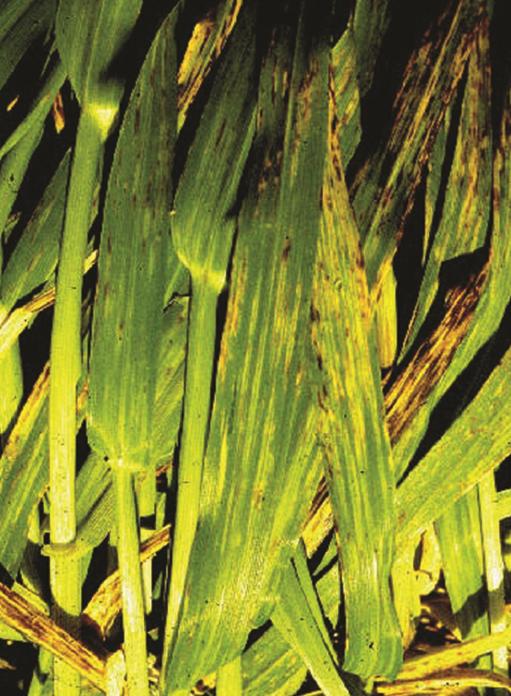
Yield losses of 50% have been recorded in the patches on susceptible varieties. As patches are quite visible, it is easy to overestimate affected areas. However, overall yield can be reduced substantially as patches spread in successive crops.

These viruses are closely related and all belong to the genus Furovirus or Bymovirus. They are all single-stranded ribonucleic acid (RNA) rod or filamentous viruses. The soilborne parasitic vector Polymyxa graminis infects crop roots and transmits these viruses. The virus survives within the spores of the vector and can persist in the soil, even in the absence of cereal crops, for many (more than 25) years.

Once a plant is infected, control is not possible. Therefore, methods to limit spread and prevent transmission are essential. Cleaning cultivation equipment between fields reduces the risk of the virus spreading. 

Source: https://ahdb.org.uk/knowledge-library/

Error
Tags: cerealsmosaic viruses

Maria YEROKHOVA

Next Post
Uruguay and China Collaborate on Bamboo and Rattan Initiatives

Uruguay and China Collaborate on Bamboo and Rattan Initiatives

Newsletter

Kubani Rice Harvest Surges Past Last Year’s Yields: Promising Trends in Russian Rice Farming

Kubani Rice Harvest Surges Past Last Year’s Yields: Promising Trends in Russian Rice Farming

18 November 2024

Canola Prices Rally by Three Percent Amid Varied Global Grain Trends

20 July 2024

Educating Farmers on Soil Health and Aflatoxin Management: A Step Towards Sustainable Agriculture in Dodoma

28 June 2024

Breeding Breakthrough: New Wheat Variety Yields 70 c/ha in Moscow Region, Doubling Regional Average

27 September 2025

Harvesting Potential: How Sung Sim Dang Is Cultivating a Unique Daejeon Bread Brand Through Local Wheat Production

4 November 2024

USDA Lowers Corn and Wheat Stocks in Latest Report: What It Means for Farmers

25 December 2024

Totschnig Sets Incentives to Strengthen Organic Farming in Austria

13 July 2024

2024 Soybean Production in South Korea: A Slight Increase in Yield Amid Growing Challenges

2 December 2024

Precision and Legacy: A Case Study in Simultaneous Harvest and Seeding Operations

13 September 2025

Global Cereal Production Set to Hit Record High in 2024: What It Means for Farmers and the Agricultural Sector

25 August 2024
  • About
  • Advertise
  • Careers
  • Contact
Call us: +51 93 999 5140

© 2020-2024 Field Crops news

Welcome Back!

Login to your account below

Forgotten Password?

Retrieve your password

Please enter your username or email address to reset your password.

Log In
No Result
View All Result
  • Home
  • News
  • Science
  • Sustainability
  • AgroTech & Innovation
  • Market News
  • Science
  • Research & Development
  • About
  • Contact

© 2020-2024 Field Crops news