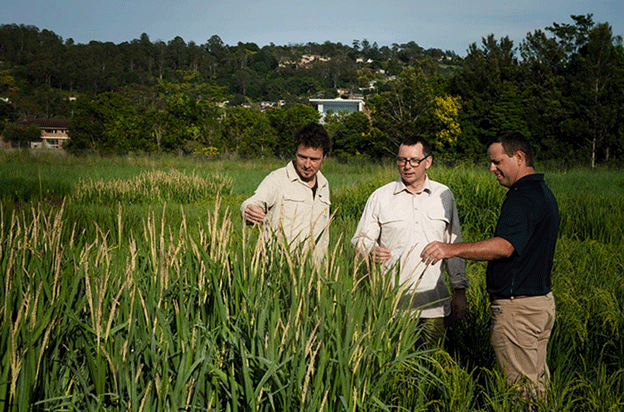
In a significant stride towards sustainable agriculture, Southern Cross University (SCU) has teamed up with Natural Rice Co., a leading rice grower in New South Wales Northern Rivers, to embark on an innovative project that combines drought and cold-tolerance traits in rice. This initiative, led by Dr. Szabolcs Lehoczki-Krsjak, a research fellow specializing in rice breeding and genetics, aims to improve dryland rice production, leveraging the region’s abundant rainfall instead of traditional irrigation methods.
The Australian Research Council (ARC) has awarded Dr. Lehoczki-Krsjak an industry fellowship worth $417,391 over three years. The project, titled “Speed Breeding with a Twist for Water-Saving Low-Carbon Rice,” seeks to develop a method for speed-breeding rice, allowing for the growth and selection of two crops per year at the nursery. This approach will enable extensive investigation into the stress tolerance of various rice genotypes.
“My aim is to examine drought and cold tolerance in rice and, once I’ve found genotypes with the necessary stress tolerance level, I’ll dissect their genetic background to identify which part of their genome carries stress-tolerance genes,” said Dr. Lehoczki-Krsjak. “This will help us to develop new climate-smart varieties of rice.”
The introduction of these dryland rice varieties promises to transform rice production by saving water, reducing greenhouse gas emissions, and maintaining both productivity and profitability. Methane, a potent greenhouse gas, is typically produced by bacteria in the flooded paddies under oxygen-restricted conditions. However, these bacteria are much less active in dryland production, significantly lowering methane emissions.
Dr. Lehoczki-Krsjak’s previous research, conducted with SCU’s Professor Tobias Kretzschmar, has already led to the development of climate-smart rice lines that save irrigation water and reduce greenhouse gas emissions. Among these are dryland-grown black rice varieties rich in natural fiber and antioxidant anthocyanins, offering both health benefits and enhanced dietary appeal.
Steve Rogers, general manager of Natural Rice Co., expressed his enthusiasm for the ongoing collaboration with SCU. “Producing dryland rice eliminates methane and irrigation,” Rogers stated. “This needs to be the goal of food production into the future. This climate we have here in the Northern Rivers is very unique for rice-growing. It’s probably the most unique dryland rice-producing area in Australia.”
The partnership between Southern Cross University and Natural Rice Co. represents a significant advancement in the quest for sustainable agriculture. By developing rice varieties that are both drought and cold-tolerant, and that thrive under dryland conditions, this project not only aims to enhance productivity and profitability but also addresses critical environmental concerns. The future of rice production could see a dramatic shift towards more sustainable practices, reducing the carbon footprint and conserving vital water resources.
Error