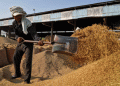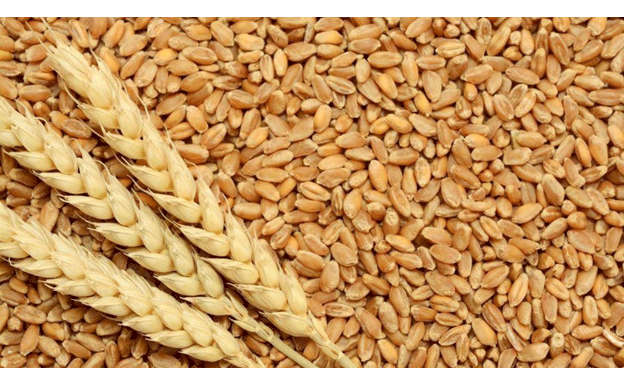
Konya, often referred to as Turkey’s granary, is experiencing a notable decrease in wheat yield this season. The vast Konya Plain, with 67% of its area dedicated to agriculture, spans 2.2 million hectares of cultivated land. However, the lack of snowfall last winter has led to a significant drop in yield. As barley harvesting concludes and wheat harvesting reaches 80% completion, farmers and agronomists are analyzing the factors behind this decline and discussing ways to mitigate future risks.
Factors Affecting Wheat Yield
Burak Kırkgöz, President of the Konya Branch of the Chamber of Agricultural Engineers (ZMO), highlights several key factors contributing to the reduced wheat yield. Extreme weather conditions, including unusually hot temperatures, accelerated the harvest period by approximately 15 days. This premature harvest, driven by climate factors, has resulted in lower-than-expected yields.
Climate Impact
Kırkgöz points out that during the flowering period, frost and cold weather led to significant empty grain heads and spaces in the wheat, further diminishing the yield. Despite an increase in wheat planting areas by 5% compared to the previous year, the anticipated increase in yield did not materialize due to these adverse weather conditions.
Expected Yield
Current estimates suggest that the wheat harvest in Konya will reach around 2 million tons, which is considerably lower than previous years. Kırkgöz emphasizes that while spring rains benefited barley more than wheat, the subsequent cold snaps during the flowering period caused substantial damage to the wheat crops.
Recommendations for Farmers
Kırkgöz advises farmers to avoid early planting in the upcoming season, as crops planted too early tend to experience significant stress and increased irrigation costs. He recommends closely monitoring weather forecasts and adjusting planting schedules accordingly to mitigate risks.
Importance of Snowfall
Snowfall plays a crucial role in the health of winter crops. Kırkgöz expresses hope for a wet year with ample snowfall, particularly in Konya, where both dry and irrigated lands coexist. On dry lands, yields range from 200 to 500 kilograms per 1,000 square meters, while irrigated lands yield between 450 to 850 kilograms per 1,000 square meters.
Need for Increased Support
Kırkgöz stresses the importance of increasing support for farmers, noting that the current subsidies for barley (75 kuruş) and wheat (1.25 lira) are insufficient. He advocates for increasing these subsidies to 1.5 lira for barley and 2.5 lira for wheat to help farmers cope with high input costs, especially in regions like Konya where irrigation costs are significant.
The wheat yield decline in Konya highlights the critical need for adaptive strategies to cope with changing climate conditions. By implementing sustainable practices, optimizing planting schedules, and increasing support, farmers can better manage risks and improve yields in future seasons. Enhanced communication and collaboration among farmers, agronomists, and policymakers will be essential to ensure the resilience and productivity of Turkey’s agricultural sector.
Error