

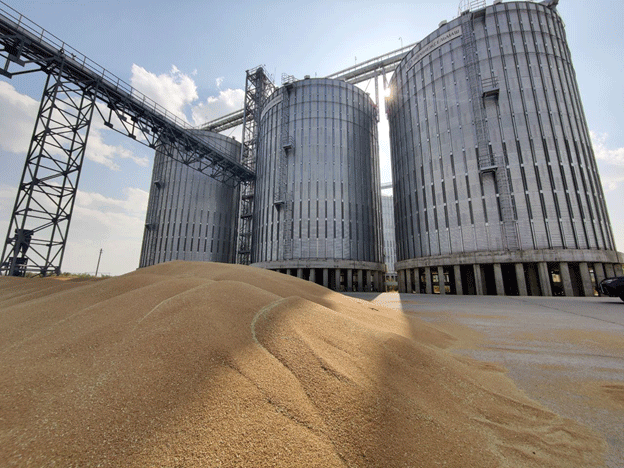
Australia exported 1,596,844 tonnes of wheat in May 2024, reflecting a 14% decrease from the 1,848,534 tonnes shipped in April. This figure is also notably lower than the 3.3 million tonnes exported in May 2023, highlighting significant changes in the global wheat market. Despite these shifts, Southeast Asia remains a key destination for Australian wheat, while exports to China have seen a sharp decline.
Wheat Export Trends
Key Markets and Volume Shifts
In May, the largest containerized wheat markets were Malaysia (34,814 tonnes), Taiwan (23,035 tonnes), and Thailand (21,815 tonnes). Bulk exports saw the Philippines leading with 314,857 tonnes, followed by Indonesia (244,111 tonnes), South Korea (164,780 tonnes), and Yemen (155,901 tonnes).
However, Australia’s bulk wheat exports to China dropped significantly to 116,285 tonnes in May, down from 516,295 tonnes in April. This substantial decrease is attributed to China’s switch to new-crop Northern Hemisphere grain, including its own.
Declining Exports and Global Trends
According to Lachstock Consulting’s wheat supply-and-demand report, Australia is expected to export less than 1 million tonnes in June, which would be the lowest monthly volume since November 2020. This decrease is in line with the global tightening of wheat supplies. The USDA’s June report cut Russian wheat production by 5 million tonnes and reduced estimates for Ukraine and the EU by 1.5 million tonnes each. Consequently, global ending stocks were lowered to 252.3 million tonnes, the lowest since 2014-15.
Australian Wheat in Global Markets
Despite the overall decline, Australian wheat continues to find significant markets in Southeast Asia and the Middle East. For instance, recent bulk exports included a shipment to Egypt, underscoring Australia’s role in global food security despite fluctuating export volumes.
Analysis and Future Outlook
The current trend indicates a tightening global wheat market, with significant supply concerns from major exporters. While Australia’s exports have declined, the demand for high-quality Australian wheat remains robust in key markets. The reduction in Chinese imports could be temporary, depending on Northern Hemisphere crop outcomes and global market dynamics.
Regional Export Breakdown
Containerized Exports (March-May 2024):
- China: 19,724 tonnes in May, totaling 85,036 tonnes over three months.
- Malaysia: 34,814 tonnes in May, totaling 79,661 tonnes over three months.
- Taiwan: 23,035 tonnes in May, totaling 67,700 tonnes over three months.
Bulk Exports (March-May 2024):
- China: 116,285 tonnes in May, totaling 1,336,235 tonnes over three months.
- Indonesia: 244,111 tonnes in May, totaling 735,482 tonnes over three months.
- The Philippines: 314,857 tonnes in May, totaling 540,556 tonnes over three months.
Australia’s wheat export landscape is undergoing significant changes, with a notable decline in shipments to China and a continued strong presence in Southeast Asian markets. The global wheat supply constraints, driven by production cuts in key exporting regions, are influencing these dynamics. As the market adjusts to these changes, Australia’s ability to navigate and respond to global demands will be crucial for maintaining its position in the international wheat trade.
Error



